Showing posts with label Student Success Stories. Show all posts

Monday, July 1, 2019

Award Winning Writer Tomohiko Kino: "It Is Up to You"

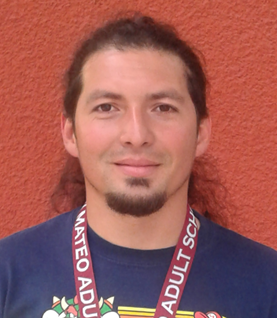
Tomohiko Kino is a SMAS Success Story wrote a prize-winning essay.  He won 3rd place in the San Mateo County Fair Writing Contest:  Division 337 "The Immigrant Experience:  Short Story, Essay, or Monologue."

Tomo, as he is called, is from Japan.  He came to the US in September of 2017.  He started at High Intermediate level in January of 2018.  He studied with Teachers Alesha, Katherine, Jessica in the morning and Patricia's and then Lisa's writing classes.  He took Patricia's writing class for two semesters before he began Lisa's Writing Intensive class.  Now he continues his English learning with the SMAS Distance Learning program while he works full time.

I asked Tomo if he had advice for students who want to improve their writing.  He answered, "Keep writing every day.  Simple sentences are okay. It is important to continue to write the sentences. I wrote the sentence everyday at least between 3 to 5."

Here, with his permission, is his winning essay. 

It Is Up to You
by Tomohiko Kino

Being an immigrant gives you a different perspective. In particular, if you do not speak the language, you have a lot of problems. This is my experience when I did not speak English well. I have been in the U.S. now for one year and a half. I came here with my wife because she transferred her work from Japan. Consequently, I quit my job as a mental health care counsellor because I wanted to support her job. 

The morning I first arrived at the SFO airport with my wife, it was nice weather, warmer than in Japan. We came out of the arrival gate, and took a yellow colored taxi in front of the gate. We had 4 large suitcases and 2 small bags, so the taxi was full. During the taxi ride, I was looking out of the window. We traveled toward our new residence in Redwood City. It was difficult to find the place because we only had the address and our phone did not work, and the driver did not know the area much either. Although the driver did not find the place, he wanted to drop us off, and I was worried about the meter because I got the feeling that the number was rising briskly. When we paid the fare, he began to calculate, and he told us to pay 1.5 times the fare. I could recognize that the meter showed a specific price, but he told us that it had nothing to do with it. He said, "I told you that you needed to pay 1.5 times the fare before you got in the taxi." He and my wife were talking emotionally, but I could not speak well. When we decided to pay, he requested a tip, so we got even more tired. We had no choice but to pay the price he asked. My wife spoke English very well, but even with her English we could not communicate well with the driver. Therefore, I felt worried about my future because my English was not as good as I thought it was. 

The first month in the U.S. was very tough for me because I had to talk with Americans, such as asking at the leasing office, shopping at the supermarket, and taking the driver's license test. I often prepared some questions in advanced if I wanted to ask something, but I could not understand what they answered in most cases. As a result, I was afraid to talk with someone in English. Although I tried to study hard, studying made me feel less confident. When I was depressed, I reflected on my international co-workers in Japan. I used to work at a beef bowl restaurant with them. Some of them were students from Vietnam, and others were Nepalese who came to Japan for their husbands' work. As I worked alongside them, I occasionally did not understand what they were saying and watched them struggle communicating with Japanese customers. However, they were such hard workers and positive although they were busy because they had to go to school after work. Moreover, most of them liked Japan and the Japanese language. I remember their smile was so impressive. When I reflected on this experience, I realized that I did not make use of my training as a mental health counselor. I was not prepared on how to deal with my newfound American life. I thought that I could and should learn from their attitudes. 

Furthermore, I realized that I could talk to people who were from other countries. When I realized that many people here did not speak English well, I started to go to the San Mateo Adult School. There were many immigrants who had some English problems like me. They were enthusiastically studying English, so it was a good stimulus for me. In particular, I was impressed by a man from South Korea. He came here with his wife and son, and he took a break from work to support his wife's job. He was very talkative and friendly. He also invited me to participate in an English conversation group at the library. When we conversed, the conversation was often unsmooth, but it was very fun. I think that we shared similar situations and felt compatible. He was crazy about golf, so he did not attend class much, instead choosing to spend his days playing golf with other players as a way to improve his English. He knew that he had only one year in the U.S., so he really enjoyed his life. I will not go back to my country soon, but I figured out that it is important to do something with enjoyment like my South Korean friend. 

In conclusion, I think my experience in America has been a great experience in the last year and a half, but I am still struggling to speak English. However, I realized that attitude is more important than language skills. I am looking for a job now, and I am thinking about taking some classes in college. I will try to be positive and cheerful like those who inspired me. In the future, I would like to contribute to society and to immigrants' lives by using my own experience.


Click here to read the full post

Wednesday, February 27, 2019

Student Ambassador Spotlight: Francisco Gonzalez

Student Ambassador Spotlight


Tell us a little bit about yourself!
Hi, my name is Francisco Gonzalez and I’m from El Salvador.  I am a very kind person, hard working, collaborative and eager to learn from others.

How long have you been a student at the San Mateo Adult School Student?
I have been attending the San Mateo Adult School for five years.

What made you decide to participate in the Student Ambassador Program?
I decided to be a Student Ambassador because I wanted to help in facilitating new applicants of the ESL program and also to assist the San Mateo Adult School Staff .

What was the highlight?
Acquiring new knowledge and communicating in two languages.

What advice would you have for someone who is interested in becoming a Student Ambassador?
It is a great opportunity use what you have learned in the classroom and it will also open up many doors for you in the Future. It is an important step in improving your life.

What’s next for you?
Enrolling in the GED program, getting my GED and the enrolling at San Mateo College.

Click here to read the full post

Tuesday, February 26, 2019

Student Ambassador Spotlight: Rie


Student Ambassador Spotlight
Tell us a little bit about yourself!

I'm Rie, and I've been apart of the Student Ambassador Program for three years. It's been great working with the staff at the SMART Center because they care so much about the students.
Rie
Alt Text: Smiling woman
with long dark hair
and checked shirt


How long have you been a student at the San Mateo Adult School Student?

I've been here for more than three years, and I took classes for pronunciation, computer software, conversation, reading, and professional business communication.

What made you decide to participate in the Student Ambassador Program?

I was interested in doing something more than just learning, and the program was perfect for me to get more experience in a different environment. Also, the school needed people who could help new students during ESL registration/orientation, and I was a match.

What was the highlight?

We created  an informational table for the second day of the two-day registration so that new students would be able to decide on classes they wanted to take before meeting with a counselor to register for classes. When I was in charge of the informational table, I asked the students the times of the day they were available and areas of English they wanted to improve. Then I informed them which classes would be suitable for them. Marina told me later on that day that I was very helpful in accelerating her job of counseling them because she did not have to explain what programs the school offers.

What advice would you have for someone who is interested in becoming a Student Ambassador?

I would recommend interested candidates take action to try this position, not just thinking about doing it. You may not feel confident to speak in front of people at first, but no one is good at it in the beginning. The more opportunities you have, the less stressed you will feel. This volunteer position will educate you on how to interact with people with limited English, too. There may not be a Student Ambassador who speaks a new students particular language, so you need to be creative with your verbal skills as well as nonverbal ones.

What’s next for you?

I would like to pursue a master's degree, which is my long-term goal.


Click here to read the full post

Monday, February 4, 2019

Green Team Volunteers in North Central Clean-Up and Garden Project

SMAS Green Team Participation in North Central Clean-Up and Garden Project

Yay to community, green, gardens, clean-ups, and SMAS volunteers!  On Saturday morning, January 12th, the Home Association of North Central San Mateo, sponsored a clean-up and garden planting in the North Central neighborhood.  North Central is our neighborhood.  Our school is part of this community.    

Representing the San Mateo Adult School Green Team, SMAS Morning Student Council President Shelley Cheng and her daughter Vivien, along with SMAS student Grace and her daughter Kate participated in this event.

Here is Shelley's description of the event:

Grace, Kate, Vivien, Shelley
HANCM Leader Amo and her daughter
at the Neighborhood Cleanup Day
First, we are very grateful to our school and community for building a bridge of communication that gives us the volunteer opportunity to participate in this clean up event. When we picked up the trash on the street, the pedestrians and staff said “ thank you “ enthusiastically to us. It made us feel that we could help others and gain more worthwhile. Also we felt we were more integrated into this community. At last, my daughter told me, “I identified that it was not an easy task to keep our community neat, so I should remind myself and my friends not to throw the trash on the ground.”


Thank you to Shelley, Grace, and their daughters for representing SMAS at this event and for making our neighborhood cleaner, safer, and healthier!

Read what the editor of the San Mateo Daily Journal, Jon Mays, had to say about the event.


Click here to read the full post

Kimie Sato: My Volunteer Opportunity

Kimie Sato is another San Mateo Adult School success.  Here, in her own words, is her story:

My Volunteer Opportunity
Thanks to Teacher Stephanie, I am finally able to start work as a volunteer at the San Mateo Senior Center. I work for the lunch program doing things such as table set up, arranging the food on the plates, serving dishes and more.
Last semester, I took Stephanie’s “Eat Healthy Be Active” health classes. She took us to the San Mateo Senior Center on a field trip during the class. At that time I received some information about volunteering. Actually, I was worried whether or not I was good enough to start to do that because of my lack of English skills. On the other hand, I didn’t want to miss the chance to volunteer, so I pushed myself to apply for the opportunity and I got it!
I believe that volunteering is the perfect opportunity to gain new skills and learn from the people who I meet, so I strongly recommend you to do it!
Thank you, Kimie, for sharing your story. You inspire us to succeed!


Click here to read the full post

Wednesday, November 1, 2017

Marina Kravtsova: A SMAS Student to SMAS Staff Success Story


 Adult Ed Works!  A Student to SMAS Staff Success Story


Marina at her desk in the SMART Center
Did you know that several SMAS staff members are former SMAS students?  How did they go from student to staff?  Teacher Cynthia sat down with one of these success stories, Marina Kravtsova, to find out.  You might know Marina - she is our English Learner Specialist. Last year she was also our Student Council Advisor.  As part of her work, she helps coordinate the Student Ambassador program and works with Patty and Cynthia to provide students with information about resources.  Monday through Friday, you can find her at her desk in the SMART Center. 

 
When did you start attending SMAS as a student?
In August, 2011

What level of ESL did you start at and what level did you finish at?
Low Beginning to High Advanced.
What other classes did you take besides ESL classes?
Writing Intensive, Afternoon Listening Speaking, Finding Job, Gardening Club, Pronunciation, Distance Learning, and Student Council.

Student Leaders
Hitomi, Marco, and Marina
explaining Red for Adult Ed
and Red T-shirts Campaign to Students
Marina is shy to mention so Teacher Cynthia will tell you that Marina was very active as an advocate for our school and all Adult Schools during a difficult time for Adult Education.  She worked hard with other student advocates to carry the message that Adult Education Matters.  You can see some of her advocacy here, here, here, here, and here.  Also, she was the first Adult School student to ever be part of state planning for Adult Education.  She was part of the Workgroup that helped plan for the new system for Adult Education.  In addition to all this, she started a Parent Club for students that ran for several years on Fridays at lunchtime. 

How long did you study at SMAS?
Around 4 years.

What was your goal in the beginning?
Be able to speak with parents and teachers in my sons' schools

What was your goal at end?
To get a job.

What is your job at SMAS?
English Learner Specialist - testing students, placing them in classes, orienting within SMAS programs.   

What do you like best about working at SMAS?
I like the people I work with.

How did you feel about applying to work as staff at your own school?  
Less scary; It was my comfort zone, but at the same time it was little bit weird to be interviewed by people i knew for years as my teachers.  

Do you have any advice for other ESL students?
Don't give up!

#student2staff  #adultedworks  #learner2earner #adultedmatters  #don'tgiveup

Marina in action:


Marching in the San Mateo Parade

Denise, Marina, and Cristina
fundraising for their trip to the AAACE Conference -
a national conference about Adult Education.
They presented at the conference.


Marina mailing her letter to Governor Brown on Red Letter Day


Click here to read the full post

Sunday, October 22, 2017

Cissie West: Student to SMAS Staff Success Story

Adult Ed Works!  A Student to SMAS Staff Success Story

Cissie at her desk in the SMART Center
Did you know that several SMAS staff members are former SMAS students?  How did they go from student to staff?  Teacher Cynthia sat down with one of these success stories, Cissie West, to find out.  You might know Cissie - she works at the front desk of our school in the afternoon, welcoming everyone who walks in the door, answering questions, answering the phone, and making sure newcomers know where to go.


What class did you take at our school?

Diane’s class - Office skills in 2002 or 2003.  I was in the class for a year.

(This class is now called "Modern Office Technology."  If you follow the guidelines, you can get college credit for it.  Learn more here.)

When did you start working at our school?

I was hired in 2004.

What do you do at our school?

My first position was working for Judy Teitler.  She was the head of the Fifty Plus program - for Older Adults.  I was her assistant.  Then I worked for Lynda Mathe, then Jeri - who is the head of the Fifty Plus program now.  And now I’m at the front desk.

What is the name of your position now?

Classified Office 1.

When you started working at our school, had you worked in an office before?  

Yes, I managed a tire company and a countertop company.

Why did you take Diane’s class?   

After 13 years of all the other jobs, I needed to relearn things.  When you work in an office, you have to know more, like spreadsheets.  Computers were getting more popular.  When I was working in the countertop store, it was working with paper and graphs.  I designed kitchen and baths.  I went from the countertop to the tire company.  The companies closed and that’s why I left both of them.  I worked at both the tire company and SMAS for a while.  

I had to update my brain cells.  Diane helped me so much.  Writing on paper is one thing.  Being able to do spreadsheets and write emails in a professional manner... That’s another!

Do you have any advice for other people who have who have been laid off or lost their job?

Go see Diane.  I’m telling you - she is great!   Nowadays a lot of office work is needed.  You learn everything in Diane’s class.  It’s the perfect class for anybody.  Even people opening up their own business.  You learn quickbooks.  So you can learn to manage your book for your own company.

What do you like about working at the adult school?

The people, the ones who want to learn.  

It’s a challenge for me, too.  It makes me want to learn a second language now.

Thank you, Cissie, for sharing some of your story with us.  Your advice can help other people who have lost their job or are looking for a new or better job.  You remind us, Adult Education Matters!  Adult Ed Works!


Click here to read the full post

Wednesday, September 13, 2017

Tania Peña: From Student to Staff

Tania Peña

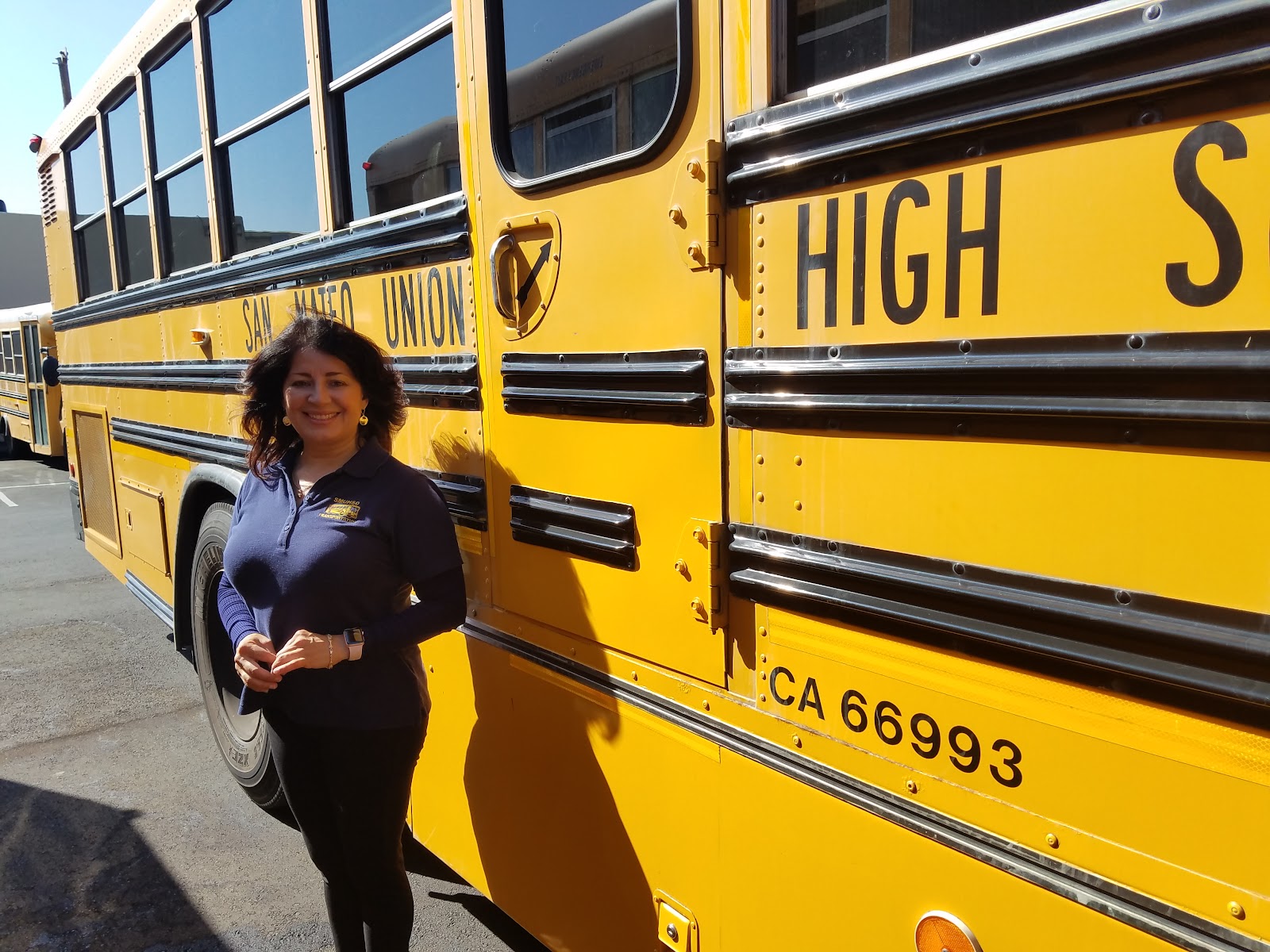
Tania moved here from Venezuela in August 2013.  Two months later, she began taking classes at the Adult School.  Now she works for the San Mateo Union High School District as a bus driver.  She is expanding her horizons, taking more classes while she works and takes care of her children.  How did she go from from new immigrant to community contributor, from student to staff?   Teacher Cynthia sat down with Tania at break time on the SMAS campus to hear her story.


“Imagine You Are Deaf”


“Everything in the US felt too big,” Tania explained.  “Imagine you are deaf,” she said.  “You can’t understand anything.”  The first time she and her older daughter took BART they got lost.  They couldn’t understand the announcements over the loudspeaker or read the information.  Tania knew she needed help to navigate life in the United States as an immigrant and mother.  She needed Adult Education!


“Just English”


When Tania started at the Adult School, her goal was “just to learn English.”  But once on the campus and in class, “Wow!  I saw so many choices.”  She took the Job Class - Passport to Employment - with Jay and Carolyn Lee.  And she took the Writing Intensive Class with Mary Peros.


A Second Home


The San Mateo Adult School became a second home for Tania.  “It’s like a brotherhood,” she said.  “People struggling with the same problems.  You feel that you are not the only one.  You feel hope.  People are close.”


“Not Just Learning English”


“When you are here, you are not just learning English, not just things in the book,” Tania explained.  “You are learning community.  You are learning the idiosyncrasies of the culture.”


Supportive Teachers and Students


Tania said SMAS teachers were very supportive.  “Many teachers,” she said, “like Jay… they do more than they have to do.  They go the extra mile.”  Tania supported in return, helping her classmates prepare and look their best for Job Fairs.  


Like Mother, Like Children


Tania is the mother of four children.  Her oldest daughter followed her into Adult School and took ESL classes, also.   Just like her mother, she felt more confident after taking ESL classes.  All of Tania’s children are in school - two in college, one in high school, one in middle school.  They follow her example and pursue an education and their dreams.


Education Continues


Tania continues to pursue education and grow her skill set.  She is taking classes at the College of San Mateo in computer office technology.  CSM recommended that she attend the SMAS High School diploma program.  Through her work in the HSD program, she is gaining the thirty five credits she needs to have her high school diploma from Venezuela validated.  


A Sense of Belonging


Tania enjoys her class at CSM but she says the college doesn’t have the closeness of the Adult School.  She stops talking to look around at the SMAS campus.   “This school is really good.  The campus is beautiful.  The plaza… “ She grows quiet looking around her at the students meeting and greeting at breaktime.  “Many times you feel sad,” she explains.  She gestures to the plaza, filled with students at breaktime.  “This is the moment,” she says, “to meet, to make friends.  Many people here have a lot of trauma.”
She pauses again.   “Here, you feel you belong.”  


Taking Chances


As a new immigrant to the United States, Tania looked for a job.  Many didn’t pay well enough to support her family.  Then she saw a job poster on Humboldt Avenue.  The First Students Bus Company was offering a class in how to drive a bus.   Tania took a chance to enroll in the class.  “I never pictured myself as a bus driver.  I was scared.  But I said, ‘I can do this.’”   Out of twenty four students, she was the only one to graduate.   


Moving Forward


Tania worked for the First Student Bus Company for a year and then applied to drive a bus for the San Mateo Union High School District.  She started as a sub and is now a regular driver, working part-time.   She drives all over the area, taking students to all the high schools in the district - Capuchino, San Mateo, Mills, etc.  She also drives a bookmobile bus for the San Mateo Public Library.  As a bus driver, immigrant, student, and mom, Tania is moving forward!


Advice for Others


I asked Tania what her advice would be for new students at San Mateo Adult School.  Here is what she shared:


  • Set a goal
  • Make a plan
  • Be relaxed.  It takes time.
  • Go step by step.
  • Keep going but always with a goal.
  • Be persistent.
  • Be organized.
  • Be positive.
  • Open your eyes - there are many resources but not always in the same place.
  • Be a good researcher - look for resources and people who can help you.


Thank you, Tania, for taking the time to share your experience with others.  Your story inspires others to succeed!


Click here to read the full post

Saturday, March 4, 2017

Jose Luis Vasquez Palacios: Dreams to Reality

Recently, Teacher Laetitia ran into one of her former students, Jose Luis Vasquez Palacios.   Nine years ago, he was in her Beginning ESL class.  Now he is producing a television show and getting ready to attend San Francisco State University in the Fall.  He was kind enough to share his story with us about how he achieved his goals and what we can all do to achieve ours.


Jose Luis Vasquez Palacios

Jose Luis moved to the US from Guatemala ten years ago.  He attended San Mateo Adult School from 2008 to 2012. At that time, Luis had in his backpack a few books, some CD’s and several dreams despite an empty stomach. He started with Teacher Laetitia in Low Beginning ESL and finished with Teacher Elizabeth in Advanced class.  

At San Mateo Adult School, Luis found people who believed in him, and the support he needed to succeed. He learned not only excellent educational lessons, but also lifetime lessons that he took to his heart until today.

From SMAS, he went to College of San Mateo.  He took just a few ESL classes at CSM and then started taking regular classes.  He majored in Digital Media and TV Production at CSM.

He received a Phi Theta Kappa Key scholarship.  He graduated from CSM cum laude.  Cum laude means with highest honors.  Only 35 out of 152 students graduated cum laude at CSM that year.  He had a 3.4 GPA

He will start San Francisco State University in August of 2017 and major in TV and Radio Journalism.

We works at KCSM as a producer and host of “What’s Up, San Mateo.”  The show airs on Saturdays at 2 pm and covers community events.  Videos of it can be seen on Youtube.
He also creates the videos needed for the CSM Excel Online course.

Q:  What is the message you hope to convey through your work as a journalist?

To tell people we all have dreams and goals and all of them are possible if we set up a plan.  It’s not just having a dream.  It’s about how we start.

Q:  Do you have any advice for SMAS students?

To learn as much as you can.  Don’t take school for granted because it’s free.  Make the best of it.  Come and pay attention. Do your homework.  Get involved in school activities and culture is very important.

Q:  Successful people always someone behind him who loved and supported them.  Who is that person for you?

My mom, Elizabeth Palacios.  She made me the person I am.  She taught me to be open-minded and humble enough to listen to advice, but also strong enough to be independent.  She also corrected me.  She gave me the balance I needed in life.

Q:  Any last thoughts?

I will always be thankful to all SMAS stuff for being there for me and making every school day special. My achievements are theirs, too, because they are my road trip partners.


Click here to read the full post

Wednesday, June 24, 2015

Ram Chandra Subedi: Helping Himself; Helping Others

Ram Subedi

Ram Chandra Subedi came to the San Mateo Adult School in May 2000. He spoke little English and was very excited by the idea that, here in California, education is available to all. He was a dedicated student, devoting many hours to English as a Second Language, and then, the Adult Learning Center where he prepared for, and attained, his GED. During the years that he was a student with us, he was a valuable and enthusiastic participant in many extra-curricular activities. He represented Nepal at International Day celebrations, educating our students and staff about life there. He also spoke at student assemblies, inspiring students to persevere in their pursuit of education.

He has never forgotten the poverty from which he came or the plight of those still in Nepal. Education is inaccessible to most children in Nepal and the lack of a high school education is the biggest obstacle to success.

Now employed as a dealer in art and antiques, he has established the Nepal Children’s Fund. His mission is to provide teachers of mathematics and English for Nepalese schools to combat the 80% failure rate in these subjects. He solicits donations, organizes fundraisers, and has established an import business to support this fund. He imports handicrafts, antiques and embroidered goods.
In addition, Ram and his employer provide scholarships which pay for tuition and school supplies for Nepalese children, and one to help a deserving graduate of the San Mateo Adult School continue his/her education at the college level.

The dedicated and caring teachers at the San Mateo Adult School offer encouragement and understanding along with the curriculum. ESL teachers Vasyl Barlak, Mary Peros and Janelle Becerra were particularly helpful to Ram as he worked on his grammar and pronunciation. Bruce Neuburger, teacher of ESL and Video Production, helped Ram with his spoken English and taught him how to create and edit videos. These skills are very helpful as he makes fundraising presentations for the foundation.

Diane Hageman is an excellent teacher, patient and careful in her explanations. She was Ram’s teacher of Modem Office Technologies where he has mastered computer applications for the business world.

Jan Becker tutored and encouraged Ram to study for, and pass, each of the four GED subject examinations.

The San Mateo Adult School offers training in English, job skills, and adult basic education, the trio of which form a strong foundation for success in our competitive society.

Ram Chandra Subedi is an outstanding example of an individual who understood the importance of these opportunities and has used them to not only support himself, but also, to contribute to the improvement of the lives of others.


Click here to read the full post
Leticia Navarro: From Student to Teacher

Leticia Navarro

A visitor to Leticia Navarro’s fourth/fifth grade class in the Fiesta Gardens Spanish/English bilingual immersion school in San Mateo, is struck by how quickly the children volunteer answers. A flow of Spanish with an occasional English word woven in if the Spanish doesn’t come quickly to mind, serves to get the point across. All the students are using the language they have to engage in the task at hand, whether the lesson of the moment is in Spanish or English.

“That’s one of the things I learned from my experience as a student in ESL classes at the Adult School”, Leticia notes. “Make a comfortable atmosphere where the students can be free to use the language they have to communicate. When I first came to the United States I was so afraid to say anything or go anywhere. Then I came to the San Mateo Adult School and my life in the United States changed.”

Leticia came to the United States from Mexico in 1989 after she had finished high school. Her father had come to the United States many years before and had been part of the Amnesty program of 1986. In 1989 with his immigration status stabilized, he was able to reunite with his family. Leticia’s father had benefited from the Adult School by taking the English classes he needed in order to qualify for Amnesty.

Encouraged by her family, one of Leticia’s first stops was the San Mateo Adult School where she enrolled in English as a Second Language (ESL) classes. From the beginning Leticia was struck by the manner that the classes were taught. Students were constantly encouraged to use the English that they had acquired. “The thing I remember most about my first class with Tim Doyle is that we went on field trips into the community. We learned how to take public transportation by riding on the bus and the train. I had never gone anywhere in the United States by myself without my father or brother. After we took a school trip to San Francisco, some friends that I had met in the class and I went by ourselves on the weekend to San Francisco. I felt so independent.”

She was so inspired by another teacher, Maria Roddy, who gave short critical thinking passages from famous writers in her Low Advanced ESL class that Leticia struggled mightily and read her first book in English, Les Miserables. Leticia studied morning through evenings and eventually honed her skills in ABE classes to the point where she felt ready to go on to community college. There Leticia balanced school, a job and romance, getting married to a man who like herself chose to go on to a four year college to become a teacher.

Leticia is now a pillar at the Fiesta Gardens school where parents, administrators and kids refer to her as “the wonderful Ms. Navarro” In her nine years at the school she has spent much time with the native Spanish and English speaking children with their struggles to acquire a second language. Her recent challenge along with all public education teachers is how to respond to the increased pressures of standardized testing, made worse by the fact that her students have to take standardized tests in two languages. An added pressure from the testing is that students in bilingual programs often do not manifest high test scores until their sixth or seventh year in bilingual schools. Panicked parents need constant reassurance that their children are learning at an appropriate pace and will eventually come out with higher cognitive abilities than their single language peers.

For Leticia the classroom is a place of transformation, where students can learn and grow. For her, part of the path was formed at Adult School where she says she gained a foundation in a new language and new culture and at the same time learned about how education could happen in a new way.


Click here to read the full post