Showing posts with label ESL. Show all posts

Monday, July 1, 2019

Award Winning Writer Tomohiko Kino: "It Is Up to You"

Tomohiko Kino is a SMAS Success Story wrote a prize-winning essay.  He won 3rd place in the San Mateo County Fair Writing Contest:  Division 337 "The Immigrant Experience:  Short Story, Essay, or Monologue."

Tomo, as he is called, is from Japan.  He came to the US in September of 2017.  He started at High Intermediate level in January of 2018.  He studied with Teachers Alesha, Katherine, Jessica in the morning and Patricia's and then Lisa's writing classes.  He took Patricia's writing class for two semesters before he began Lisa's Writing Intensive class.  Now he continues his English learning with the SMAS Distance Learning program while he works full time.

I asked Tomo if he had advice for students who want to improve their writing.  He answered, "Keep writing every day.  Simple sentences are okay. It is important to continue to write the sentences. I wrote the sentence everyday at least between 3 to 5."

Here, with his permission, is his winning essay. 

It Is Up to You
by Tomohiko Kino

Being an immigrant gives you a different perspective. In particular, if you do not speak the language, you have a lot of problems. This is my experience when I did not speak English well. I have been in the U.S. now for one year and a half. I came here with my wife because she transferred her work from Japan. Consequently, I quit my job as a mental health care counsellor because I wanted to support her job. 

The morning I first arrived at the SFO airport with my wife, it was nice weather, warmer than in Japan. We came out of the arrival gate, and took a yellow colored taxi in front of the gate. We had 4 large suitcases and 2 small bags, so the taxi was full. During the taxi ride, I was looking out of the window. We traveled toward our new residence in Redwood City. It was difficult to find the place because we only had the address and our phone did not work, and the driver did not know the area much either. Although the driver did not find the place, he wanted to drop us off, and I was worried about the meter because I got the feeling that the number was rising briskly. When we paid the fare, he began to calculate, and he told us to pay 1.5 times the fare. I could recognize that the meter showed a specific price, but he told us that it had nothing to do with it. He said, "I told you that you needed to pay 1.5 times the fare before you got in the taxi." He and my wife were talking emotionally, but I could not speak well. When we decided to pay, he requested a tip, so we got even more tired. We had no choice but to pay the price he asked. My wife spoke English very well, but even with her English we could not communicate well with the driver. Therefore, I felt worried about my future because my English was not as good as I thought it was. 

The first month in the U.S. was very tough for me because I had to talk with Americans, such as asking at the leasing office, shopping at the supermarket, and taking the driver's license test. I often prepared some questions in advanced if I wanted to ask something, but I could not understand what they answered in most cases. As a result, I was afraid to talk with someone in English. Although I tried to study hard, studying made me feel less confident. When I was depressed, I reflected on my international co-workers in Japan. I used to work at a beef bowl restaurant with them. Some of them were students from Vietnam, and others were Nepalese who came to Japan for their husbands' work. As I worked alongside them, I occasionally did not understand what they were saying and watched them struggle communicating with Japanese customers. However, they were such hard workers and positive although they were busy because they had to go to school after work. Moreover, most of them liked Japan and the Japanese language. I remember their smile was so impressive. When I reflected on this experience, I realized that I did not make use of my training as a mental health counselor. I was not prepared on how to deal with my newfound American life. I thought that I could and should learn from their attitudes. 

Furthermore, I realized that I could talk to people who were from other countries. When I realized that many people here did not speak English well, I started to go to the San Mateo Adult School. There were many immigrants who had some English problems like me. They were enthusiastically studying English, so it was a good stimulus for me. In particular, I was impressed by a man from South Korea. He came here with his wife and son, and he took a break from work to support his wife's job. He was very talkative and friendly. He also invited me to participate in an English conversation group at the library. When we conversed, the conversation was often unsmooth, but it was very fun. I think that we shared similar situations and felt compatible. He was crazy about golf, so he did not attend class much, instead choosing to spend his days playing golf with other players as a way to improve his English. He knew that he had only one year in the U.S., so he really enjoyed his life. I will not go back to my country soon, but I figured out that it is important to do something with enjoyment like my South Korean friend. 

In conclusion, I think my experience in America has been a great experience in the last year and a half, but I am still struggling to speak English. However, I realized that attitude is more important than language skills. I am looking for a job now, and I am thinking about taking some classes in college. I will try to be positive and cheerful like those who inspired me. In the future, I would like to contribute to society and to immigrants' lives by using my own experience.


Click here to read the full post

Monday, February 4, 2019

Kimie Sato: My Volunteer Opportunity

Kimie Sato is another San Mateo Adult School success.  Here, in her own words, is her story:

My Volunteer Opportunity
Thanks to Teacher Stephanie, I am finally able to start work as a volunteer at the San Mateo Senior Center. I work for the lunch program doing things such as table set up, arranging the food on the plates, serving dishes and more.
Last semester, I took Stephanie’s “Eat Healthy Be Active” health classes. She took us to the San Mateo Senior Center on a field trip during the class. At that time I received some information about volunteering. Actually, I was worried whether or not I was good enough to start to do that because of my lack of English skills. On the other hand, I didn’t want to miss the chance to volunteer, so I pushed myself to apply for the opportunity and I got it!
I believe that volunteering is the perfect opportunity to gain new skills and learn from the people who I meet, so I strongly recommend you to do it!
Thank you, Kimie, for sharing your story. You inspire us to succeed!


Click here to read the full post

Monday, September 24, 2018

Volunteer Rita: Integrating Into The Community


Rita with one of the Keys to Success that she designed for Adult Ed Week 2018
Many SMAS students become active volunteers - both at school and in the community.  Rita Maria Noguera Ricardi is one of these students.  Here is her story:

  1. Where you are from and what are the languages you speak?


I was born in São Paulo, Brazil. I speak Portuguese. My father is Spanish, and I am also Spanish. I lived 20 years in Madrid, Spain, and I speak Spanish.


  1. How long have you been a student at SMAS?  What classes are you taking now and have taken in the past?


I started studying at SMAS in February 2017. I have studied two courses with the teacher Elizabeth, one with teacher Vasyl, and two with Deep. I have also done conversation classes with David, Lili, and Glenn.


Now I'm in Low Advanced, with Jessica. I am also taking the Career Exploration course and the ESL City Government Academy program.


I think it is important to talk when commenting to teachers that I am dyslexic. All teachers have demonstrated understanding and support in my difficulty, and encourage me to continue making progress.

 
4. Tell us about your volunteering experience - what you did, how you got started, etc.
 
Note:  Rita volunteers at SMAS as a Student Ambassador and also in many places in the community.

Mid–Peninsula Boys & Girls Club.
Since June 2017 - Art Educator
Design and delivery of art workshops for children from 6 to 14.
My husband and I contacted the center.
I wanted to be able to work with children and that it be near my home.


San Mateo Public Library
Since April 2018  - Creative Workshops in Spanish for preschool (with English translation)
Design and delivery of workshops where children and their parents enjoy the creative process, develop their imaginations, and encourage their artistic expressions.
My husband and I contacted the center.
I proposed a new activity that suits the library's activities.


SMAS-SAN MATEO ADULT SCHOOL
Since January 2018 - Help new students arriving at the center, as a translator from English to Portuguese and / or Spanish.
Teacher Vasyl encouraged me to sign up and I thought it was a good idea.


KIDS & ART*
May 06, 2018 - Design and delivery of the workshop: "You are the most special person in the whole wide world".
Artist Krytzia Daboub and Art educator, Rita Noguera treated pediatric cancer families to a special treat during this workshop.


PENINSULA MUSEUM OF ART*
March 25, 2018 - Design and delivery of the workshop: “Jugar con Arte”, with families. "The memory of water." Bilingual workshop: Spanish and English. Run by Rita Noguera and Krytzia Dabdoub.


FAMILY CONNECTIONS – MENLO PARK*
May-June, 2017 - Accompany and support pre-school classes with children and parents.
* The contact for these three volunteer activities were thanks to my friend Krytzia.


7.  What are your favorite parts of volunteering?

I like learning new things and sharing my knowledge. It is a very enriching information exchange.
I have searched for these volunteer jobs, because I am an art teacher, with more than 27 years of experience in art workshops with children and adults. I have worked in Brazil, Spain, and now in the United States.

Being a Student Ambassador was something new, because I had never done a job as a translator. It is very rewarding. I recently arrived at the Adult School not knowing very well what was going to happen. When I noticed that there was a Student Ambassador, I felt more confident, knowing that the school only wants to help us, that we are fortunate to be able to take advantage of this opportunity. In general, they believe me and breathe relieved, and giving a smile.

I like helping people. It is good to do volunteer work in something that you like. You may not have any experience in the volunteer work you intend to do, and you may or may not like it. If you do not like it, you will know that this is not for you and you can find another activity.

8.  What is your advice for SMAS students who are thinking about volunteering?
 
I recommend everyone who has time and availability to do some volunteer work.
It is the possibility to know more about the community in which we are living, to share knowledge, and to practice English. To anyone who wants to do volunteer work, I recommend that you look for something related to what you like, or something done before living here. By doing something that you like you can make connections with what you already know and bring new perspectives. Surely there will be many people willing to help you in the search of an appropriate volunteer service. Sometimes I could find it hard to know where to start. You may be afraid or ashamed, but I encourage you to overcome these normal barriers of adaptation. For me, volunteer work is a very good way to integrate and be known in the community.

I thank all the people who have made it possible for me to carry out and continue to carry out this volunteer work.
 
 
Thank you, Rita, for sharing your story.  You inspire us to take risks, share of our talents, and be generous with time, talent, and skills.


Mid-Peninsula Boys & Girls Club.


Macintosh HD:Users:user:Desktop:rita MAC:Boys and Girls Club:Fotos actividades:IMG_0154.JPGMacintosh HD:Users:user:Desktop:rita MAC:Boys and Girls Club:Fotos actividades:IMG_0153.JPG
Hanging ornament workshop and drawing. April 04, 2018.


Macintosh HD:Users:user:Desktop:rita MAC:Boys and Girls Club:Fotos actividades:2018 agosto 1:IMG_3661.JPGMacintosh HD:Users:user:Desktop:rita MAC:Boys and Girls Club:Fotos actividades:2018 agosto 1:IMG_3666.JPG
Workshop "Creating with squares". August 01, 2018.


Macintosh HD:Users:user:Desktop:rita MAC:Boys and Girls Club:Fotos actividades:IMG_5069.JPGMacintosh HD:Users:user:Desktop:rita MAC:Boys and Girls Club:Fotos actividades:IMG_5178.JPG
Workshop “Autumn”. November 2018
SAN MATEO PUBLIC LIBRARY


Macintosh HD:Users:user:Desktop:rita MAC:Biblio San Mateo:abril  27 de 2018 UN LIBRO:Fotos del taller:jugar13.jpgMacintosh HD:Users:user:Desktop:rita MAC:Biblio San Mateo:abril  27 de 2018 UN LIBRO:Fotos del taller:jugar2.jpg
Workshop “Circles”. June, 2018


Macintosh HD:Users:user:Desktop:rita MAC:Biblio San Mateo:Peq Azul peq Amarillo y mas :IMG_3034.JPGMacintosh HD:Users:user:Desktop:rita MAC:Biblio San Mateo:Peq Azul peq Amarillo y mas :IMG_3038.jpg
Workshop “Colors”. May 2018


KIDS & ART


Macintosh HD:Users:user:Desktop:rita MAC:Arte en Familia CALIFORNIA:Kids Art:Fotos 6 de mayo TALLER:IMG_0864.JPGMacintosh HD:Users:user:Desktop:rita MAC:Arte en Familia CALIFORNIA:Kids Art:Fotos 6 de mayo TALLER:IMG_0878.JPG
PENINSULA MUSEUM OF ART
Macintosh HD:Users:user:Desktop:rita MAC:Arte en Familia CALIFORNIA:Peninsula Museum of Art marcho 2018:2018 03 25 Fotos Memoria agua:IMG_2473.JPGMacintosh HD:Users:user:Desktop:rita MAC:Arte en Familia CALIFORNIA:Peninsula Museum of Art marcho 2018:2018 03 25 Fotos Memoria agua:IMG_2484.JPGMacintosh HD:Users:user:Desktop:rita MAC:Arte en Familia CALIFORNIA:Peninsula Museum of Art marcho 2018:2018 03 25 Fotos Memoria agua:IMG_2500.JPGMacintosh HD:Users:user:Desktop:rita MAC:Arte en Familia CALIFORNIA:Peninsula Museum of Art marcho 2018:2018 03 25 Fotos Memoria agua:IMG_2506.JPGMacintosh HD:Users:user:Desktop:rita MAC:Arte en Familia CALIFORNIA:Peninsula Museum of Art marcho 2018:2018 03 25 Fotos Memoria agua:IMG_2503.JPG


Click here to read the full post

Wednesday, November 1, 2017

Marina Kravtsova: A SMAS Student to SMAS Staff Success Story


 Adult Ed Works!  A Student to SMAS Staff Success Story


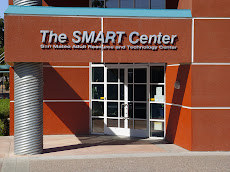
Marina at her desk in the SMART Center
Did you know that several SMAS staff members are former SMAS students?  How did they go from student to staff?  Teacher Cynthia sat down with one of these success stories, Marina Kravtsova, to find out.  You might know Marina - she is our English Learner Specialist. Last year she was also our Student Council Advisor.  As part of her work, she helps coordinate the Student Ambassador program and works with Patty and Cynthia to provide students with information about resources.  Monday through Friday, you can find her at her desk in the SMART Center. 

 
When did you start attending SMAS as a student?
In August, 2011

What level of ESL did you start at and what level did you finish at?
Low Beginning to High Advanced.
What other classes did you take besides ESL classes?
Writing Intensive, Afternoon Listening Speaking, Finding Job, Gardening Club, Pronunciation, Distance Learning, and Student Council.

Student Leaders
Hitomi, Marco, and Marina
explaining Red for Adult Ed
and Red T-shirts Campaign to Students
Marina is shy to mention so Teacher Cynthia will tell you that Marina was very active as an advocate for our school and all Adult Schools during a difficult time for Adult Education.  She worked hard with other student advocates to carry the message that Adult Education Matters.  You can see some of her advocacy here, here, here, here, and here.  Also, she was the first Adult School student to ever be part of state planning for Adult Education.  She was part of the Workgroup that helped plan for the new system for Adult Education.  In addition to all this, she started a Parent Club for students that ran for several years on Fridays at lunchtime. 

How long did you study at SMAS?
Around 4 years.

What was your goal in the beginning?
Be able to speak with parents and teachers in my sons' schools

What was your goal at end?
To get a job.

What is your job at SMAS?
English Learner Specialist - testing students, placing them in classes, orienting within SMAS programs.   

What do you like best about working at SMAS?
I like the people I work with.

How did you feel about applying to work as staff at your own school?  
Less scary; It was my comfort zone, but at the same time it was little bit weird to be interviewed by people i knew for years as my teachers.  

Do you have any advice for other ESL students?
Don't give up!

#student2staff  #adultedworks  #learner2earner #adultedmatters  #don'tgiveup

Marina in action:


Marching in the San Mateo Parade

Denise, Marina, and Cristina
fundraising for their trip to the AAACE Conference -
a national conference about Adult Education.
They presented at the conference.


Marina mailing her letter to Governor Brown on Red Letter Day


Click here to read the full post

Saturday, March 4, 2017

Jose Luis Vasquez Palacios: Dreams to Reality

Recently, Teacher Laetitia ran into one of her former students, Jose Luis Vasquez Palacios.   Nine years ago, he was in her Beginning ESL class.  Now he is producing a television show and getting ready to attend San Francisco State University in the Fall.  He was kind enough to share his story with us about how he achieved his goals and what we can all do to achieve ours.


Jose Luis Vasquez Palacios

Jose Luis moved to the US from Guatemala ten years ago.  He attended San Mateo Adult School from 2008 to 2012. At that time, Luis had in his backpack a few books, some CD’s and several dreams despite an empty stomach. He started with Teacher Laetitia in Low Beginning ESL and finished with Teacher Elizabeth in Advanced class.  

At San Mateo Adult School, Luis found people who believed in him, and the support he needed to succeed. He learned not only excellent educational lessons, but also lifetime lessons that he took to his heart until today.

From SMAS, he went to College of San Mateo.  He took just a few ESL classes at CSM and then started taking regular classes.  He majored in Digital Media and TV Production at CSM.

He received a Phi Theta Kappa Key scholarship.  He graduated from CSM cum laude.  Cum laude means with highest honors.  Only 35 out of 152 students graduated cum laude at CSM that year.  He had a 3.4 GPA

He will start San Francisco State University in August of 2017 and major in TV and Radio Journalism.

We works at KCSM as a producer and host of “What’s Up, San Mateo.”  The show airs on Saturdays at 2 pm and covers community events.  Videos of it can be seen on Youtube.
He also creates the videos needed for the CSM Excel Online course.

Q:  What is the message you hope to convey through your work as a journalist?

To tell people we all have dreams and goals and all of them are possible if we set up a plan.  It’s not just having a dream.  It’s about how we start.

Q:  Do you have any advice for SMAS students?

To learn as much as you can.  Don’t take school for granted because it’s free.  Make the best of it.  Come and pay attention. Do your homework.  Get involved in school activities and culture is very important.

Q:  Successful people always someone behind him who loved and supported them.  Who is that person for you?

My mom, Elizabeth Palacios.  She made me the person I am.  She taught me to be open-minded and humble enough to listen to advice, but also strong enough to be independent.  She also corrected me.  She gave me the balance I needed in life.

Q:  Any last thoughts?

I will always be thankful to all SMAS stuff for being there for me and making every school day special. My achievements are theirs, too, because they are my road trip partners.


Click here to read the full post

Wednesday, June 24, 2015

Ram Chandra Subedi: Helping Himself; Helping Others

Ram Subedi

Ram Chandra Subedi came to the San Mateo Adult School in May 2000. He spoke little English and was very excited by the idea that, here in California, education is available to all. He was a dedicated student, devoting many hours to English as a Second Language, and then, the Adult Learning Center where he prepared for, and attained, his GED. During the years that he was a student with us, he was a valuable and enthusiastic participant in many extra-curricular activities. He represented Nepal at International Day celebrations, educating our students and staff about life there. He also spoke at student assemblies, inspiring students to persevere in their pursuit of education.

He has never forgotten the poverty from which he came or the plight of those still in Nepal. Education is inaccessible to most children in Nepal and the lack of a high school education is the biggest obstacle to success.

Now employed as a dealer in art and antiques, he has established the Nepal Children’s Fund. His mission is to provide teachers of mathematics and English for Nepalese schools to combat the 80% failure rate in these subjects. He solicits donations, organizes fundraisers, and has established an import business to support this fund. He imports handicrafts, antiques and embroidered goods.
In addition, Ram and his employer provide scholarships which pay for tuition and school supplies for Nepalese children, and one to help a deserving graduate of the San Mateo Adult School continue his/her education at the college level.

The dedicated and caring teachers at the San Mateo Adult School offer encouragement and understanding along with the curriculum. ESL teachers Vasyl Barlak, Mary Peros and Janelle Becerra were particularly helpful to Ram as he worked on his grammar and pronunciation. Bruce Neuburger, teacher of ESL and Video Production, helped Ram with his spoken English and taught him how to create and edit videos. These skills are very helpful as he makes fundraising presentations for the foundation.

Diane Hageman is an excellent teacher, patient and careful in her explanations. She was Ram’s teacher of Modem Office Technologies where he has mastered computer applications for the business world.

Jan Becker tutored and encouraged Ram to study for, and pass, each of the four GED subject examinations.

The San Mateo Adult School offers training in English, job skills, and adult basic education, the trio of which form a strong foundation for success in our competitive society.

Ram Chandra Subedi is an outstanding example of an individual who understood the importance of these opportunities and has used them to not only support himself, but also, to contribute to the improvement of the lives of others.


Click here to read the full post

Leticia Navarro: From Student to Teacher

Leticia Navarro

A visitor to Leticia Navarro’s fourth/fifth grade class in the Fiesta Gardens Spanish/English bilingual immersion school in San Mateo, is struck by how quickly the children volunteer answers. A flow of Spanish with an occasional English word woven in if the Spanish doesn’t come quickly to mind, serves to get the point across. All the students are using the language they have to engage in the task at hand, whether the lesson of the moment is in Spanish or English.

“That’s one of the things I learned from my experience as a student in ESL classes at the Adult School”, Leticia notes. “Make a comfortable atmosphere where the students can be free to use the language they have to communicate. When I first came to the United States I was so afraid to say anything or go anywhere. Then I came to the San Mateo Adult School and my life in the United States changed.”

Leticia came to the United States from Mexico in 1989 after she had finished high school. Her father had come to the United States many years before and had been part of the Amnesty program of 1986. In 1989 with his immigration status stabilized, he was able to reunite with his family. Leticia’s father had benefited from the Adult School by taking the English classes he needed in order to qualify for Amnesty.

Encouraged by her family, one of Leticia’s first stops was the San Mateo Adult School where she enrolled in English as a Second Language (ESL) classes. From the beginning Leticia was struck by the manner that the classes were taught. Students were constantly encouraged to use the English that they had acquired. “The thing I remember most about my first class with Tim Doyle is that we went on field trips into the community. We learned how to take public transportation by riding on the bus and the train. I had never gone anywhere in the United States by myself without my father or brother. After we took a school trip to San Francisco, some friends that I had met in the class and I went by ourselves on the weekend to San Francisco. I felt so independent.”

She was so inspired by another teacher, Maria Roddy, who gave short critical thinking passages from famous writers in her Low Advanced ESL class that Leticia struggled mightily and read her first book in English, Les Miserables. Leticia studied morning through evenings and eventually honed her skills in ABE classes to the point where she felt ready to go on to community college. There Leticia balanced school, a job and romance, getting married to a man who like herself chose to go on to a four year college to become a teacher.

Leticia is now a pillar at the Fiesta Gardens school where parents, administrators and kids refer to her as “the wonderful Ms. Navarro” In her nine years at the school she has spent much time with the native Spanish and English speaking children with their struggles to acquire a second language. Her recent challenge along with all public education teachers is how to respond to the increased pressures of standardized testing, made worse by the fact that her students have to take standardized tests in two languages. An added pressure from the testing is that students in bilingual programs often do not manifest high test scores until their sixth or seventh year in bilingual schools. Panicked parents need constant reassurance that their children are learning at an appropriate pace and will eventually come out with higher cognitive abilities than their single language peers.

For Leticia the classroom is a place of transformation, where students can learn and grow. For her, part of the path was formed at Adult School where she says she gained a foundation in a new language and new culture and at the same time learned about how education could happen in a new way.


Click here to read the full post

Alvaro Pirir: Out of the Rain and into the Warmth of San Mateo Adult School


Alvaro Pirir

“On a stormy day, years ago, a very wet little boy holding the hand of a frightened little girl, entered my office and asked, in Spanish, “Is this a school?” That is how I met Alvaro Pirir,” remembers Meredith Hystad, Student Services Aide at San Mateo Adult School.
“Political refugees, his family had recently arrived in San Mateo from Guatemala. Traumatized by Guatemalan civil war experiences, afraid of this new land, and unable to communicate, his mother hid in their apartment with the four children,” continues Meredith. “Finally, Alvaro, at 14, decided that his younger sister and brother should be in school. On the day I met him, he had wandered the streets with his little sister in tow, seeking directions to a school, until he found the San Mateo Adult School. Now armed with the information be needed, he thanked me and went back out into the rain on his mission to the elementary school district.” Alvaro and Meredith quickly became friends, and she continued, “to help him negotiate the rules and regulations of the school districts.”

“Months later he appeared again, this time, beaming,” says Meredith.

“My younger brother and sister are in school,” Alvaro told her, “My older brother and I have jobs. Now, I can go to school, too!”

“He enrolled in high school, but soon learned that he would not be allowed to work full time while a high school student. He worked two jobs until he was 18, and then entered the adult school ESL program to improve the English he had learned on his own. When he entered our Adult Learning Center to study the high school English and mathematics he had missed, he was reading at the third grade level. Teacher Jan Becker recognized the potential of this bright and determined young man. She gave him special guidance in his Basic Reading and Basic Math classes, helping him to learn how to approach the challenges of effective studying and test taking. Under her tutelage, Alvaro raised his reading level from third grade to ninth grade in only four years. His math skills, which were minimal when be began studying with her, increased dramatically. By the time he finished his work with her, he had attained a GED and had the confidence to enter the College of San Mateo.”

Alvaro wanted to enter the nursing program at the college, but discovered that it required a GED, so he returned to the adult school to complete the GED program while still taking college classes and working. He was driven, and sometimes needed a gentle reminder to be patient and to treat himself more gently. These reminders came from the encouragement of dedicated staff like ESL Coordinator Tim Doyle, teacher Mary Peros, and his friend Meredith.

In 2003, Alvaro won the Luis Blum Memorial Scholarship, which salutes “the pioneering spirit” of “those who strive to make life better for themselves and future generations in the United States of America”. This scholarship paid for his books for two semesters at College of San Mateo.

“Recently, Alvaro and his two brothers pooled their money and bought a small house in Hayward, CA. He continues to work and study with the goals of becoming a registered nurse, earning a Bachelor’s degree from San Francisco State College, and then, if he can save enough money, go on to medical school to become a physician.

“Alvaro has helped support his mother as she adjusted to a new country, he encouraged his siblings to pursue education and work together for a common goal, and he set ambitious goals for himself and accomplished them. Six years ago, he didn’t know one word of English. Today, he is well on his way to being a registered nurse and earning an Associate of Arts degree. His easy grin and eternally positive attitude infect everyone he meets.”
What a happy accident that Alvaro first wandered into the San Mateo Adult School!” says Meredith. “This positive and flexible environment has made it possible for him to study despite his demanding work schedules. He has benefited from the kindness and patience of his ESL teachers, who taught him how to communicate in his new language. And under the guidance of his Adult Learning Center teachers, he learned how to study and prepare for examinations.”

“Now, busy with college classes and working, Alvaro still finds time periodically to visit us, update us on his progress, and thank us.”


Click here to read the full post

Tuesday, August 26, 2014

Successful Transplant

Former SMAS Student Hiro Hiyama
Hiro and Misuzu Hiyama and their business, Utsawa Floral Design, are successful transplants in the USA, thanks to support from the San Mateo Adult School.

Hiro and Misuzu moved here from Japan.  Hiro learned plant design and bonsai from his grandmother and uncle.  He and his wife, Misuzu, had a successful floral business in Tokyo.

They wanted to open a business here in the Bay Area.  They knew they needed good English and understanding of US Culture to be successful here.

 So they came to the San Mateo Adult School. 

They studied ESL with Teachers David, Mary, and Vasyl. 
Misuzu studied in Distance Learning with Teacher Cynthia.

And Hiro studied how to get a job and start a business with Teacher Martin in the special class Martin started to help ESL students find jobs, Passport to Employment.

They learned how to speak clearly, communicate well, and understand US culture.

Now their new business is a big success.  The San Francisco Chronicle wrote about it.  You can read the article here.  You can find Utsawa on Facebook here.

To find success in a new place, both plants and people need support while they grow new roots. 

Once their new roots are strong, they flourish and we all benefit.

San Mateo Adult School helps immigrants contribute their unique skills, gifts, and beauty to our community.


Click here to read the full post